
When it comes to shipping and delivery, understanding the term “business days” is crucial, especially for USPS services. Did you know that weekends and federal holidays can significantly impact your delivery timeline? Knowing how business days are defined can help you manage expectations, plan your shipments accurately, and ensure your packages arrive on time. In this article, we will explore the intricacies of USPS delivery timelines, clarify what constitutes a business day, and provide valuable insights to help you navigate the postal system effectively. Whether you are a business owner relying on timely deliveries or a consumer tracking your packages, having a clear grasp of these timelines will empower you to make informed decisions. Dive in to uncover essential tips that can elevate your shipping strategies and enhance your overall experience with USPS services.
Understanding Business Days in USPS Delivery
is crucial for anyone navigating the complexities of shipping and mailing. Business days are generally defined as Monday through Friday, excluding federal holidays. This means that any packages or mail dropped off on a weekend or holiday will not begin their journey until the next business day, significantly impacting delivery timelines. For instance, if you send a package on a Saturday and it is set to take three business days for delivery, the recipient may not receive it until the following Thursday.
To help clarify how USPS defines business days, it’s important to consider two key components: operational schedules and holiday observance. The USPS operates on a schedule that respects federally recognized holidays, during which their services are either limited or unavailable. Customers should always check the USPS holiday schedule to understand how holidays may affect their shipping timelines, especially during peak seasons like around Thanksgiving or Christmas.
When planning your shipment timelines, take into account not just the estimated delivery days, but also these non-business days, as they could create a lag in expected delivery. Additionally, maintaining awareness of your local post office’s hours can provide a clearer picture of when your parcel will actually begin its transit. This strategic approach ensures timely communication and planning for both senders and recipients, providing peace of mind in the often unpredictable world of postal services.
How USPS Defines Business Days

Understanding the concept of business days within the USPS framework is vital for anyone looking to effectively manage their mailing and shipping needs. Business days are defined as Monday through Friday, excluding all federal holidays. This means that any mail or packages dropped off during weekends or observed federal holidays will not be processed until the next business day. For example, if a package is sent on a Friday and is designated for three business days of delivery, the recipient may not receive it until the following Wednesday, as Monday is a non-business day in this scenario.
USPS operates under a structured calendar that aligns with federally recognized holidays, which can affect service availability. These holidays include New Year’s Day, Independence Day, Thanksgiving, and Christmas, among others. During these days, USPS services are either limited or completely closed, placing additional emphasis on planning your shipments accordingly. To avoid delays, customers should regularly consult the USPS holiday schedule, particularly during peak periods like the holidays, where transit times may require extra consideration.
When further analyzing how business days function within USPS, it’s important to recognize that local post office hours can also dictate when mail starts its journey. If you deposit a package after the cutoff time on a Friday, it will not be processed until Monday morning. With this in mind, awareness of both federal holidays and local post office operations becomes essential. This knowledge can help customers set realistic expectations about delivery timelines, fostering better communication with recipients and minimizing frustrations often associated with postal services.
Business Days vs. Non-Business Days: Key Differences

Understanding the distinctions between business days and non-business days is crucial for effectively managing your shipping expectations with USPS. Business days refer to Monday through Friday, during which operations run smoothly for mail processing and delivery. In contrast, non-business days include Saturdays, Sundays, and federal holidays, when USPS services are either limited or entirely closed. This fundamental difference directly impacts the speed and reliability of deliveries, as any package mailed on a non-business day will not be processed until the next business day.
One of the most notable implications of non-business days is in the delivery estimates provided by USPS. For instance, if you dispatch a package on a Thursday with a two-business-day delivery expectation, the delivery countdown begins on Friday. If Friday is the last business day available, the package would not arrive until the following Tuesday, as Saturday and Sunday are non-business days. This often leads to confusion, especially for customers not familiar with the operational calendar of USPS, making careful planning essential.
Another key factor is the timing of mail drop-offs relative to post office hours. If a package is submitted for shipping after the cutoff time on a business day, it may not begin its journey until the subsequent business day. For example, a package dropped off after 5 PM on a Friday will not be processed until Monday morning, underscoring the importance of understanding local post office schedules alongside the broader USPS business day definitions.
To ensure smooth deliveries and satisfied recipients, it’s advisable for customers to always factor in both business and non-business days when planning their shipments. By comprehensively grasping these differences, customers can set realistic expectations for delivery timelines, helping to avoid potential disappointments and encouraging effective communication with recipients about when to anticipate their packages.
USPS Delivery Timeframes: What to Expect

To effectively manage your shipping timelines with USPS, understanding what to expect regarding delivery timeframes is essential. USPS offers a variety of shipping options, each with its own estimated delivery times based on service type and distance. For instance, Priority Mail typically promises delivery within 1 to 3 business days, while First-Class Mail generally takes 1 to 5 business days. It’s crucial to note that these estimates apply only to business days, meaning Saturdays, Sundays, and federal holidays are excluded from the delivery countdown.
When planning your shipments, remember that the time of day you drop off your package also influences when it will be processed. Packages dropped off before the local post office’s cutoff time are likely to start their journey on the same day, while those dropped off afterward will be processed the next business day. This can lead to unexpected delays, especially if you’re sending items close to a weekend or holiday. Therefore, to avoid any miscalculations, familiarize yourself with the specific operating hours of your local post office.
Furthermore, be aware of regional factors that could affect delivery timelines. For example, a package sent from a densely populated urban area might reach its destination faster than one sent from a rural location, even if the actual distance is shorter. Seasonal fluctuations, such as increased mail volume during holidays, can also impact delivery speed. By taking all these factors into account, you can better predict when your packages will arrive, set realistic expectations for recipients, and communicate more effectively about potential delivery timelines.
Factors Influencing USPS Delivery Timelines
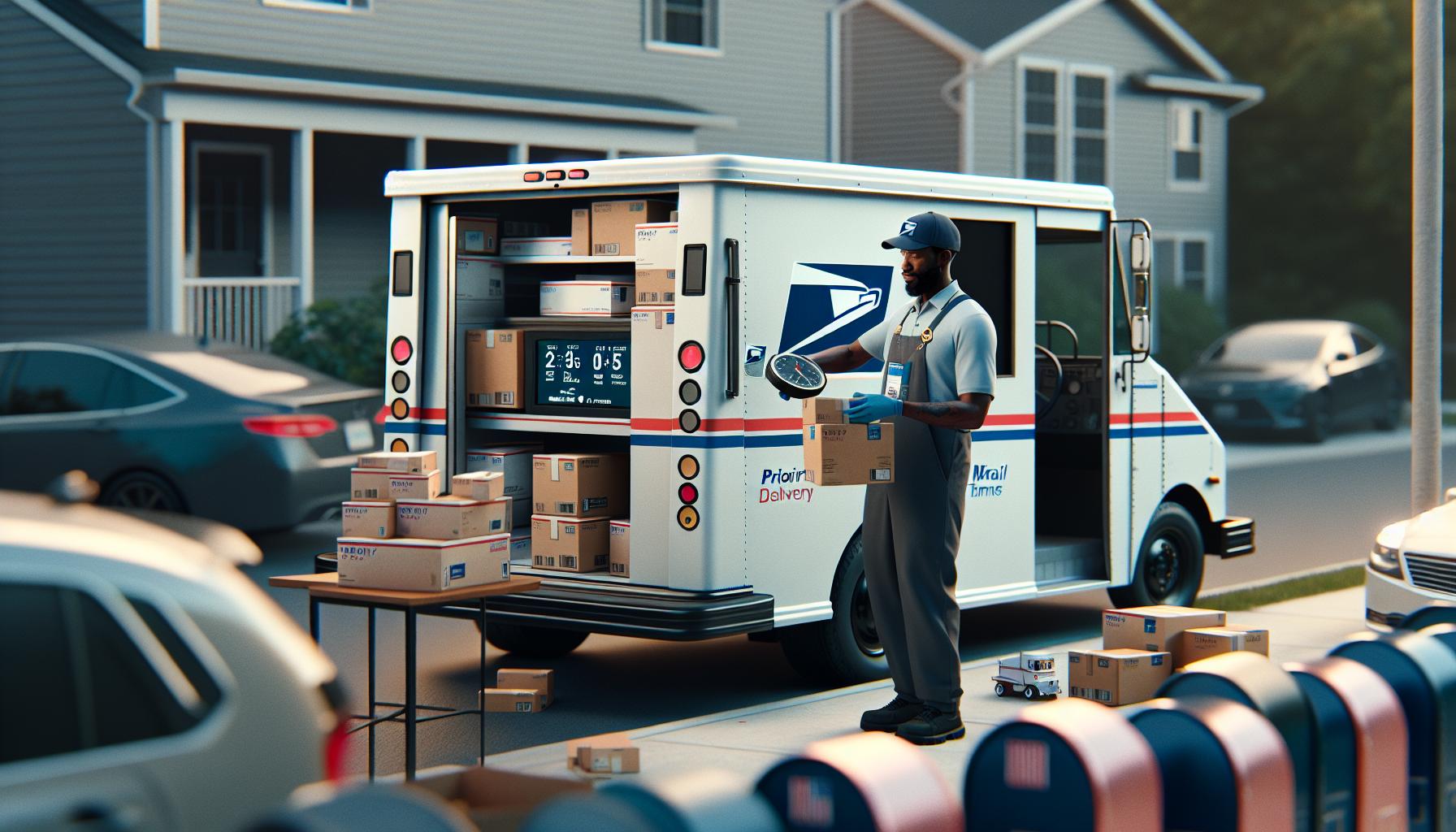
Every day, millions rely on the USPS for timely deliveries, but numerous factors can influence how quickly a package reaches its destination. Understanding these elements can help both senders and recipients set realistic expectations, ultimately leading to a smoother shipping experience.
One major factor is the shipping service chosen. USPS offers various services such as First-Class, Priority, and Priority Express, each with different delivery timeframes. Choosing the right service based on urgency can significantly impact delivery speed. For instance, while First-Class Mail can take 1 to 5 business days, Priority Mail promises quicker delivery, typically within 1 to 3 business days.
Another consideration is package weight and size. Heavier and larger packages often require different handling and will be charged accordingly, which can lead to longer transit times. Furthermore, the drop-off time also plays a critical role-packages dropped off before the cutoff time at the local post office are processed the same day, whereas those dropped off afterward won’t start their journey until the next business day.
The origin and destination locations further affect delivery speed. Shipping from urban areas generally results in faster delivery compared to rural locations due to the concentration of distribution centers and the presence of more frequent mail routes. Seasonal fluctuations, such as holiday surges, can also impact delivery timelines. Increased volume during holiday seasons can overwhelm the USPS network, causing delays even for packages sent via expedited services.
Lastly, external factors like weather conditions or supply chain disruptions can cause unexpected delays, which are often beyond the control of USPS. By staying informed and proactive about these influencing factors, both businesses and individual customers can enhance their shipping strategies and mitigate potential issues associated with delivery timelines.
Regional Variability in USPS Delivery Speed
Shipping speed can vary significantly depending on regional factors affecting the USPS delivery network. While many expect uniformity in delivery timelines, the geographical area of both the origin and destination plays a crucial role in how swiftly mail and packages arrive. Urban areas often benefit from more concentrated postal facilities and greater frequency of service, leading to faster delivery times compared to rural or remote regions, which may experience delays due to less frequent mail routes and fewer distribution centers.
Additionally, regional variances emerge from local demand and operational capacity. In states with high population densities, such as California or New York, the USPS is better equipped to handle increased volume. During peak mailing seasons, like the holidays, these regions can see enhanced delivery times because of robust sorting facilities and a higher number of delivery personnel. Conversely, in less populated states or rural areas, factors like geography and limited routing options can contribute to extended delivery times.
Weather conditions can exacerbate these differences; for instance, regions prone to extreme weather events-such as hurricanes or blizzards-may experience more frequent service interruptions. Conversely, areas with milder weather might not face such disruptions, ensuring more predictable delivery schedules.
To navigate these complexities, customers can leverage tools like the USPS tracking feature for real-time updates, allowing for proactive management of their mail and packages. Understanding regional delivery variability not only helps set realistic expectations but also aids in selecting appropriate services based on urgency and destination to optimize delivery timelines.
Importance of Holidays and Weekends in Shipping
Understanding the dynamics of shipping through USPS requires an awareness of how specific days can affect delivery timelines. Holidays and weekends play a pivotal role in this system, shaping everything from processing times to when packages are dispatched. During holidays, USPS observes designated non-business days, meaning that no mail is delivered and processing halts. Depending on the type of service selected, this can significantly extend overall delivery timelines.
Weekends introduce another layer of complexity. Typically, USPS does not deliver regular mail on Sundays; however, packages shipped via Priority Mail Express can still be delivered on this day. This creates a dichotomy between standard mail and expedited services-an important consideration for businesses relying on timely deliveries. For instance, if a shipment is sent late on a Friday, it may not be processed until the following Monday, effectively adding two days to the expected delivery time.
To navigate these challenges, it is crucial for customers to plan shipments around these non-business days. Such strategic timing ensures packages reach their destination promptly, especially during peak seasons like the holidays when the volume of deliveries skyrockets. Utilizing USPS tools, such as their online scheduling or rate calculators, can also assist in making informed decisions about when to ship to avoid delays.
In essence, awareness of holiday and weekend schedules is vital for anyone relying on USPS for shipping needs. By integrating this knowledge into planning, customers can better manage expectations and optimize their shipping strategies, ensuring that critical deadlines are met.
Common Misconceptions About USPS Business Days

Understanding how USPS defines and handles business days can be complicated, leading to several misconceptions that can impact shipping strategies. One common belief is that all calendar days count towards delivery timelines, neglecting the fact that USPS explicitly designates business days as those from Monday to Saturday, excluding federal holidays. This is critical for planning timely deliveries, especially for e-commerce businesses or individuals who rely on swift shipping.
Another widespread misunderstanding involves the expectation of immediate processing and delivery. Many assume that if a package is sent on a Friday, it will be processed and delivered that weekend. However, since USPS does not typically process or deliver regular mail on Sundays, any shipments lodged late on a Friday could face a two-day delay, essentially reactivating on Monday. This gap can be especially detrimental during peak periods or during the holiday season, where processing times may further increase due to higher volumes.
Additionally, there is a misconception regarding the ability to track packages on non-business days. Some people may think that tracking updates will continue to flow over weekends and holidays, but in reality, USPS only updates tracking information on business days as packages are moved through processing facilities. This can create frustration for customers who expect real-time updates.
By clarifying these misconceptions, individuals and businesses can improve their shipping strategies, set realistic expectations with customers, and ultimately enhance their overall logistics operations. Understanding the nuances of USPS business days is essential in navigating the complexities of shipping effectively.
How to Track Your USPS Shipment

To effectively track your USPS shipment and stay informed about its journey, utilize the comprehensive tools and resources available. A strong starting point is the USPS Tracking feature, accessible through their official website and mobile app. By entering your tracking number-found on your receipt or the shipping confirmation email-you can access real-time updates that provide details such as when your package is out for delivery or has been successfully delivered.
Understanding the tracking updates in the context of business days is crucial for managing expectations. Keep in mind that while you can check the status any day, updates typically occur only on business days. This means any tracking information may not reflect changes over weekends and federal holidays when USPS operations are limited. If your package is sent on a Friday, for example, and tracking shows that it was accepted but not updated through the weekend, it can lead to confusion. It’s always wise to communicate this timeline with customers or stakeholders, especially those relying on timely deliveries.
Additionally, ensure you’re signed up for notifications. USPS offers text and email alerts that provide updates about critical movements of your package, such as when it is out for delivery or if there are any delivery issues. Not only does this maintain transparency, but it also allows for prompt action if a package is delayed.
Finally, for packages with guaranteed delivery services, familiarity with the accompanying delivery guarantees can be beneficial. Using services like Priority Mail Express provides a clear framework for delivery expectations, often within one to two business days, which enhances your logistics planning and customer satisfaction. By leveraging these tracking solutions, you can not only follow your shipment’s path with confidence but also improve your business operations by setting realistic delivery timelines.
Tips for Faster USPS Delivery
To enhance USPS delivery speed, being strategic about your shipping practices can make a significant difference. Keeping in mind that USPS processes packages primarily on business days, you can employ a few key tactics to maximize efficiency and ensure timeliness.
First, consider using Priority Mail and Priority Mail Express services. These options are explicitly designed for quicker delivery, often within one to two business days. While Priority Mail typically includes a delivery window of one to three business days, Priority Mail Express offers a guaranteed overnight delivery feature, making it ideal for urgent shipments. It’s beneficial to assess the critical nature of your shipment and choose the service that aligns with your urgency requirements.
Next, optimize your shipping schedule. Aim to ship late in the week (particularly on Fridays) if possible. Given USPS’s operational hours, packages sent late on a Friday won’t likely start their journey until the following Monday, which could extend delivery times unnecessarily. Instead, targeting early in the week can ensure your package is processed through their system during business hours and can capitalize on the additional resources available at the start of the week.
Another valuable tip is to utilize the USPS Click-N-Ship service for print-at-home shipping labels which can save time. When you purchase postage online, you can also schedule package pickups directly from your home or office. This eliminates the need to visit a postal location and can expedite the process of getting your package into the USPS network.
Lastly, factor in address accuracy and customs documentation when shipping internationally. Taking a few extra moments to verify that all addresses, including ZIP codes, are accurate and that all necessary customs forms are filled out can significantly reduce delays in transit. Undeliverable packages or returned shipments not only add to delivery times but can also lead to additional costs and administrative workload.
By implementing these actionable strategies, you can enhance your experience with USPS delivery, ensuring that your packages arrive at their destinations as quickly as possible while keeping your logistics operations running smoothly.
Impact of COVID-19 on USPS Delivery Schedules
The COVID-19 pandemic has significantly altered delivery schedules across the globe, and the United States Postal Service (USPS) is no exception. As demand for shipping surged due to increased online shopping and the need for essential deliveries, USPS faced unprecedented challenges. These challenges included workforce shortages due to illness, social distancing measures, and increased package volume, which all contributed to delays in delivery times.
Understanding how these factors intersect with business days is crucial for anyone relying on USPS for timely processing. Typically, USPS processes packages on business days, which exclude weekends and federal holidays. However, during the pandemic, many customers reported delays exceeding the usual timelines set forth by USPS, as unforeseen circumstances disrupted operations. For example, standard services that would typically promise delivery within certain business days became more unpredictable as facilities struggled to handle both the volume and health protocols.
To navigate these disruptions more effectively, individuals and businesses should be proactive in their shipping strategies. Leveraging expedited services such as Priority Mail or Priority Mail Express can mitigate some risks associated with delays, as these options receive priority processing and often deliver faster than standard services. Moreover, timely shipment is essential; sending packages early in the week allows for processing during full business days, ensuring they can properly move through the USPS network.
Lastly, staying informed through USPS updates can provide valuable insights into any operational changes and localized impacts on delivery times. By understanding the effects of COVID-19 on USPS schedules, shippers can make more informed decisions, which ultimately leads to better reliability in their shipping logistics.
Customer Experiences: Real-Life USPS Delivery Timelines

In the realm of postal services, customer experiences highlight the nuances of USPS delivery timelines, particularly concerning business days. For instance, many users have shared their insights on how the pandemic reshaped their expectations. Reliable service has always been a hallmark of the USPS, but anecdotes from customers reveal that what was once a predictable system transformed into one marked by variability. Some have experienced prompt delivery within the promised timeframes, utilizing services like Priority Mail, while others witnessed prolonged waits, sometimes extending well beyond the standard delivery estimates.
Understanding that USPS typically processes shipments from Monday to Friday raises questions about how holidays disrupt this routine. For example, numerous customers have reported that mailing a package just before a major holiday often results in it sitting idle until the next business day. Such experiences stress the importance of planning around holidays and weekends, especially for businesses that depend on timely deliveries to meet client needs. Additionally, regional differences have been cited; some areas may experience swift processing, while others linger in delays due to varying local conditions.
Moreover, tracking has become an essential aspect of the USPS experience. Many users advocate for the robust tracking features available, which allow them to monitor packages in real-time. Yet, even with tracking, discrepancies between expected and actual delivery times can lead to confusion and frustration. As a result, understanding the implications of each shipping option-from standard to express-can equip customers to make better-informed decisions.
Every story shared by customers serves as a reminder of the complexities involved in postal services, especially during times of unprecedented demand. By taking proactive measures-like opting for faster services, shipping items early in the week, and closely monitoring service updates-shippers can enhance their shipping reliability. Whether it’s for personal packages or business supplies, these insights provide a vital perspective on navigating USPS’s delivery timelines effectively.
Faq
Q: What counts as a business day for USPS?
A: A business day for USPS is defined as any day from Monday to Friday, excluding federal holidays. This means shipments sent on a weekend or holiday will begin processing the next business day. For detailed timing, see the “How USPS Defines Business Days” section of the article.
Q: Does USPS deliver on weekends?
A: USPS typically does not deliver on Saturdays and Sundays for regular services. However, some services, like Priority Mail Express, include weekend delivery. For more on delivery schedules, refer to the “Business Days vs. Non-Business Days” section.
Q: How does USPS handle holidays in delivery schedules?
A: USPS recognizes federal holidays as non-business days, meaning no mail is delivered on these dates. Shipments scheduled around holidays may experience delays. For a complete list of holidays affecting delivery, check the “Importance of Holidays and Weekends in Shipping” section.
Q: What influences the delivery time of USPS packages?
A: Several factors can affect USPS delivery times, including the service type selected, the distance between sender and receiver, and current postal workloads. For more detail, refer to the “Factors Influencing USPS Delivery Timelines” section.
Q: Can I track my USPS package during business days?
A: Yes, you can track your USPS package at any time, including on non-business days. Tracking information updates as your package moves through the system. For guidance on tracking, refer to the “How to Track Your USPS Shipment” section.
Q: What are the delivery timeframes for different USPS services?
A: USPS offers various services with different delivery timeframes. For example, First-Class Mail typically takes 1-3 business days, while Priority Mail usually arrives in 1-3 business days as well. For specifics, see the “USPS Delivery Timeframes: What to Expect” section.
Q: How are business days counted for international shipments?
A: For international shipments, USPS does not count weekends or U.S. federal holidays. The delivery timeline will vary by destination country and rely on customs processing. Refer to the “Regional Variability in USPS Delivery Speed” section for more information.
Q: Why do some packages arrive later than expected?
A: Packages may arrive later than expected due to several reasons, including increased shipment volume, weather delays, or operational challenges within the USPS. For understanding these delays, see the “Customer Experiences: Real-Life USPS Delivery Timelines” section.
Future Outlook
Understanding business days for USPS is crucial for managing your shipping timelines effectively. Remember, while USPS helps transport on weekends and holidays, actual delivery occurs during standard business days, typically Monday through Saturday. To make the most of your shipping experience, consider exploring our guides on shipping rates and how to track your packages for real-time updates.
If you have any lingering questions about your specific shipping needs or would like to learn more about optimizing your delivery strategy, don’t hesitate to check out our articles on avoiding common shipping pitfalls and best practices for preparing shipments. Dive deeper into our resources and start enhancing your shipping game today!
Join our newsletter for more tips and insights to keep your business on the cutting edge of logistics. Remember, your shipping success starts with informed decisions-act now to stay ahead!